Katy pocket parks are worth considering when you have a little free time rather than a whole day. A small public space can offer a pause, a historical detail, or a new way of looking at familiar streets. Plan one short stop well, and you may get more from it than from rushing between several larger attractions.
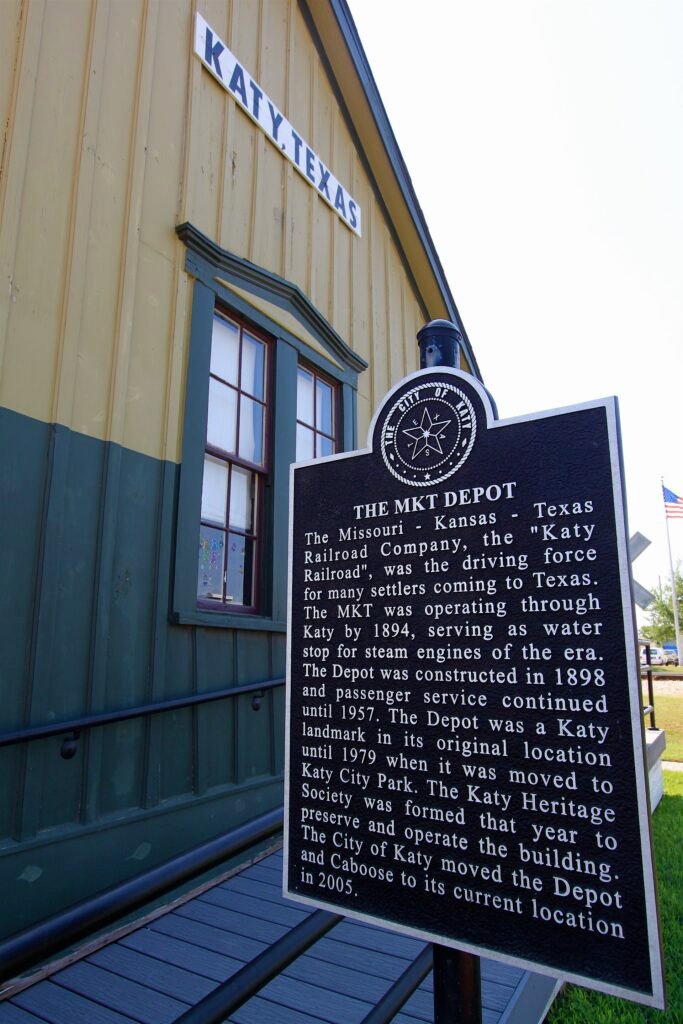
The City of Katy parks directory identifies Thomas Park at 5919 Fourth Street and the MKT Railroad Depot and Park at 5615 First Street. Thomas Park includes the Tri-County marker, a gazebo, and a walking path. Railroad Park centers on the historic depot and a displayed red caboose. Use those specific names when choosing where to start.
Give Thomas Park a few attentive minutes
A marker can be easy to pass without reading. Make it the point of the stop instead. Read what it says, notice its setting, and think about why that location matters. You do not need to turn the visit into a research project; one accurately understood detail is enough.
Then spend a few minutes noticing the space around it. Where would you choose to sit? Does the park feel like somewhere you would stop between errands, or a place you would visit deliberately? These are questions about your habits, not a judgment about who should live nearby.
Read the Tri-County marker as a geography lesson
The city’s Thomas Park listing identifies the Tri-County marker with the meeting of Harris, Waller, and Fort Bend counties. That gives a brief stop a specific subject: the relationship between a place name and the boundaries that organize it. Read the marker itself and distinguish its historical explanation from any assumptions you brought about what “Katy” covers.
You can turn the visit into a small map exercise. Before reading, ask your companions what they expect the marker to explain. Afterward, compare that expectation with the actual wording. If you photograph the marker, take one readable view and another showing its setting. This preserves both the information and the memory of where you encountered it.
That observation does not establish the county, taxing entities, or municipal services for another address. Those remain property-specific questions. For the park visit, the reward is simpler: a familiar local name becomes more geographically interesting. A few minutes spent reading closely can reveal something that a drive through the area would never make you pause to consider.
Treat Railroad Park as a different kind of pause
At Railroad Park, let the depot and caboose provide the focus. Look at their scale and relationship to the surrounding streets. If you want to enter the museum, verify its current opening arrangements separately. Seeing an outdoor display does not mean the interior is open at that moment.
Look at the depot as part of a working system
The Katy Heritage Society identifies the MKT Depot Museum at 5615 First Street and publishes its visitor contact information. If you want to combine an exterior look with a museum visit, verify that schedule first. The Society’s historic-house tours are a different offering at Heritage Park, so do not use their calendar to decide whether the depot is open.
Outside, choose a visual relationship to examine: the building beside the displayed rail equipment, the scale of a doorway, or the contrast between metal and wood. Describe the visible detail without assigning it an undocumented function. If the interior is open, use the displays or staff interpretation to test the question that the exterior raised.
A concise photo sequence can be more memorable than a collection of unrelated close-ups. Start with a context view from an allowed location, then a detail that interested you, and finish with a note identifying the depot correctly. There is no need to enter a restricted area or climb on a display to make the visit feel complete.
Photographs can help you remember the visit, but stay within public access areas and follow posted restrictions. Avoid climbing on equipment or crossing a barrier for a better angle. If you are with others, try asking everyone to identify a different visual detail rather than gathering only the same group photograph.
Do not force the stops into a walking route
Two parks in the same downtown area may look easy to connect on a map. Before deciding to walk between them, check the actual route, crossings, surfaces, and conditions. You can also visit them separately. A useful local guide should leave room for that choice instead of treating one itinerary as suitable for everyone.
Make a short outing work on its own terms
For a two-stop visit, treat Thomas Park and Railroad Park as separate arrivals until you have checked the connection yourself. Save both addresses and examine the crossings and available route rather than drawing a straight line between map pins. If a walking connection does not suit your group or the conditions, visiting by separate trips still delivers the intended experience.
Choose an order based on the part with a schedule. A confirmed museum opening should set the sequence if entering the depot matters; an outdoor-only outing can remain more flexible. Share that distinction with anyone joining you. “Meet at the depot exterior” and “meet for a museum tour” sound similar but create quite different expectations.
Leave the last portion unassigned. You might spend it sitting, reviewing a photograph of the marker, or discussing what the railway display made you wonder about. Resist adding another attraction simply because there is time left. The value of a pocket-park outing is that it can fit a modest opening in the day while still giving you a specific local detail to remember.

For a short outing, agree on a natural stopping point before you begin. Perhaps the goal is to read the marker, take a few notes, and sit briefly. If the day remains comfortable, add another stop. If it does not, you have still completed the plan you came for.
Open a small-park observation game
Find one historical reference, one design detail, and one practical feature you would use again. Read the official marker rather than guessing its meaning. Keep your route short enough that you can enjoy the stops without watching the clock.
Notice the difference between visiting and living
Our Katy neighborhood and local-life guide offers a wider starting point for exploring the area. Pocket parks can help you understand its texture, but a home decision needs a broader view of the address, services, condition, and everyday travel.
Write down the places that felt worth returning to and why. The Aurhomes Group home buyer guide can help you connect those preferences to specific property questions. The goal is a home search informed by real routines, with room left over for small discoveries.