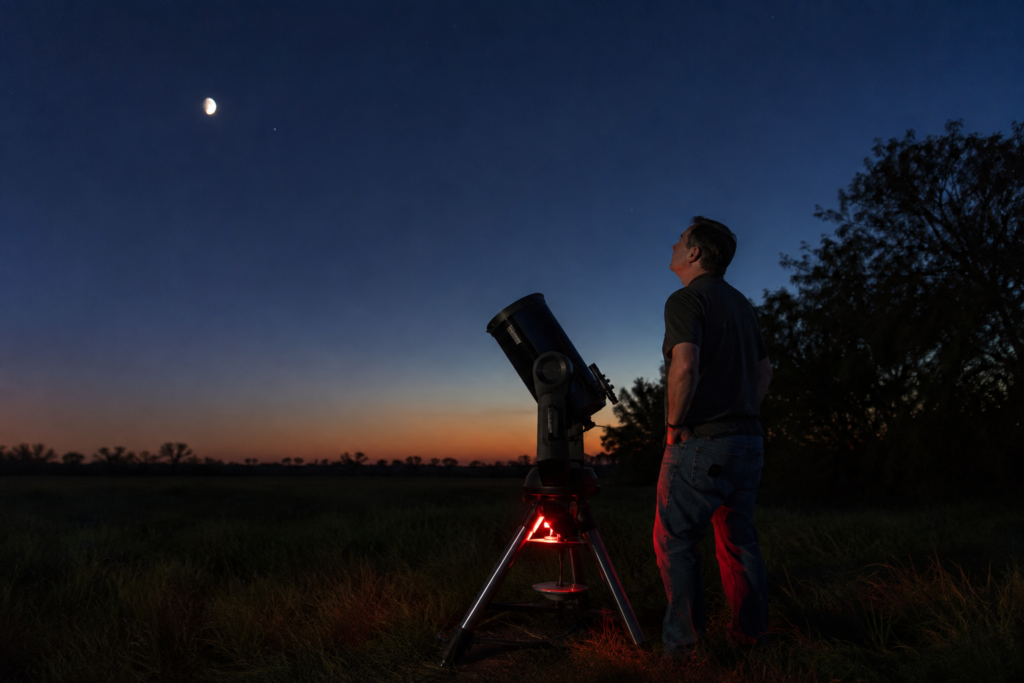
A night looking upward can change the way you use a familiar park. International Observe the Moon Night at Memorial Park offers an astronomy-focused evening on September 19, 2026, with a specific meeting point and a chance to ask questions. You can come curious without pretending to know your way around the sky already.
Memorial Park Conservancy’s official event page, checked September 6, lists a free program from 7 to 9 p.m. with Houston Astronomical Society. The meeting point is the North Lakeside Pavilion in Clay Family Eastern Glades, at 6500 Memorial Drive. Use the page’s RSVP link for current registration instructions.
Find the Moon Night meeting point
Memorial Park is too broad a location to use as your only arrival instruction. Save the Eastern Glades address and the North Lakeside Pavilion detail together. Open the official park map to understand the approach before leaving home, then check current parking guidance and signs on arrival.
Give yourself time to walk from your arrival point and find the group while there is still some evening light. If you are meeting friends, share the named pavilion rather than a pin placed loosely in the park. Decide on a reunion point for the end of the event too, particularly if everyone will leave by a different route.
Bring questions instead of expectations
Think of two things you would like to understand: why parts of the Moon appear bright or dark, how an observer chooses equipment, or what to notice without magnification. Asking a focused question can make a brief conversation with a volunteer much more useful.
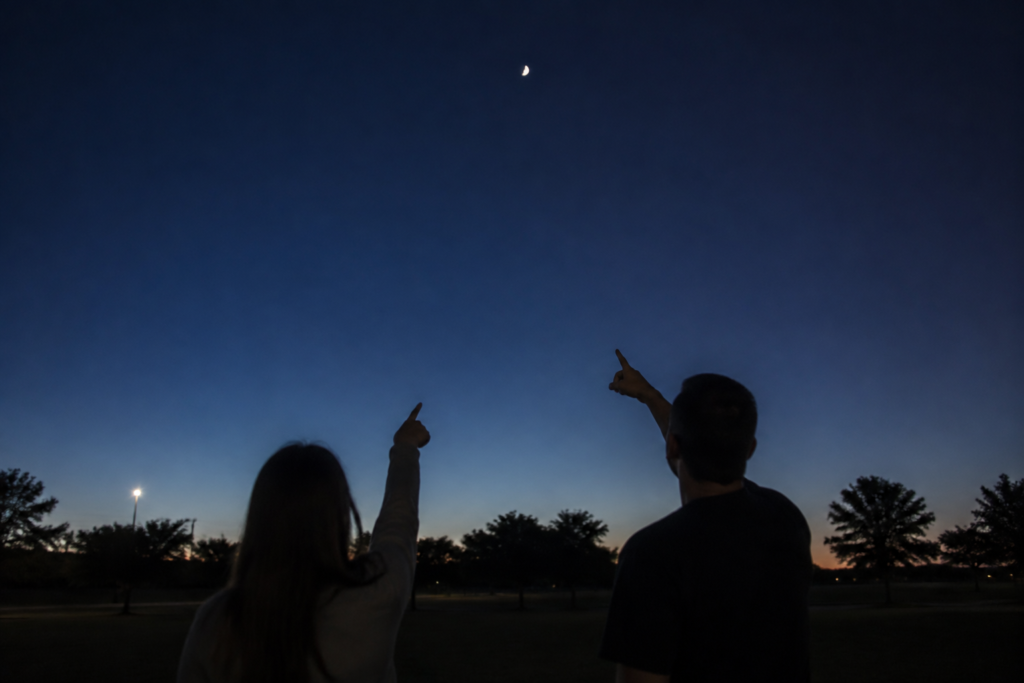
The event page promises an astronomy gathering, not a guaranteed view of a particular feature through a particular instrument. Equipment and observations depend on the organizer and conditions. Let the people leading the program explain what is available that evening rather than building the outing around a photograph from another observatory or a previous year.
Keep your setup considerate
Wear footwear you can walk and stand in, and keep belongings compact. If you bring a light, ask the organizers how to use it without disturbing other observers. Avoid aiming bright phone screens or a camera flash into someone else’s view. Give equipment and its operator room, and wait for instructions before touching anything.
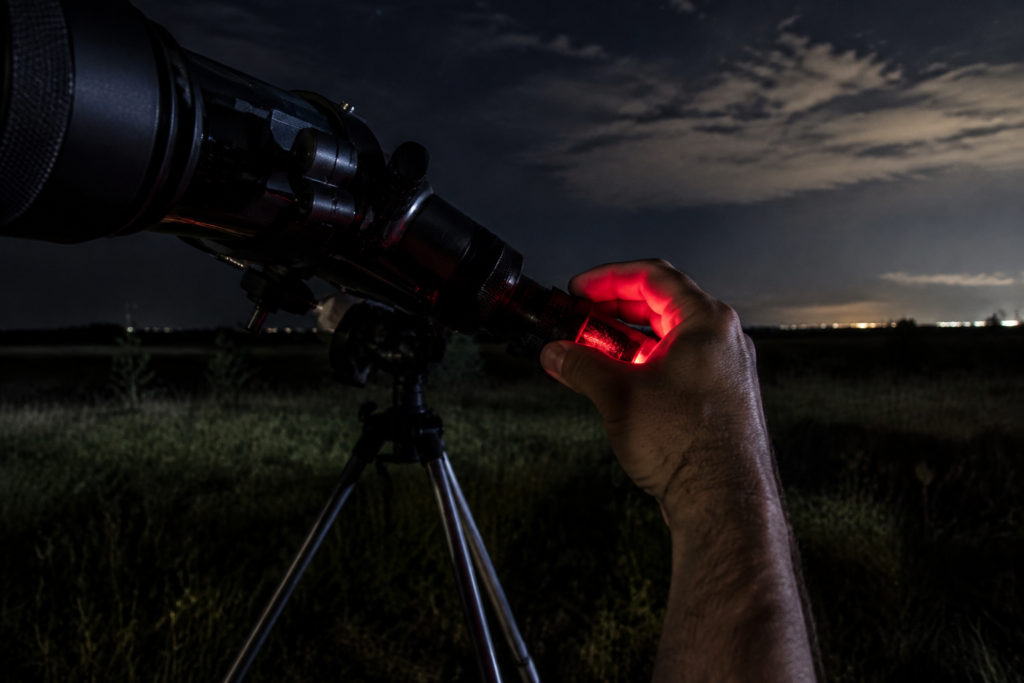
You do not need to document every moment. Put the phone away for part of the visit and allow yourself to look carefully. If you want a photograph through an instrument, ask whether that is possible and appropriate before trying. A patient approach helps the next person enjoy the same opportunity.
Weather is part of an observing plan
Check the official event page and registration messages on the day. Clouds or other conditions can affect observing, and organizers may update the program or attendance instructions. Do not assume a forecast for another part of Houston describes the event location.
Choose a fallback that does not depend on the program being moved to a different night. You might simply reschedule your park outing or keep a separate dinner plan. Follow any official closure or cancellation instruction; a public park location does not make an organized activity immune to changes.
Give your eyes a question to answer
Before joining an instrument queue, look at the Moon with your unaided eyes and describe what you notice. Is its outline easy to distinguish? Which areas look brighter or darker? You do not need to name a feature to begin observing. Starting with your own description gives you something specific to ask an astronomer when it is your turn.
Try comparing the view with a companion’s description. One person may notice the overall shape while another notices a dark patch. Ask the volunteer how those observations relate to what is visible through the instrument that evening. This approach makes the session a conversation about what you can actually see, rather than a search for a promised image.
A useful question is “What should I look for first?” The answer can help you make sense of a brief turn at an eyepiece. Follow the operator’s instructions, take the time offered and then step back so the next person can look. If something is unclear, ask rather than pretending you saw a detail you could not find.
Learn what the equipment is doing
The presence of different instruments can be an opportunity to ask about observing itself. What makes a particular setup useful for this target? How does the operator find and keep it in view? Why might the image appear different from a familiar photograph? Let the volunteers explain the equipment they have actually brought, rather than assuming every telescope works in the same way.
If you wear glasses or have difficulty positioning yourself at an eyepiece, describe that to the operator. Ask how to approach the instrument comfortably. Do not adjust a control or lean on the equipment without permission. A small unplanned movement may interrupt the next person’s view or require the volunteer to reset the instrument.
There is no need to buy equipment before trying this event. Use the evening to discover whether you enjoy patient observation and which questions interest you. If you want to continue afterward, ask Houston Astronomical Society where it posts public programs and introductory information. A first visit can lead to another outing without turning immediately into a shopping decision.
Keep a small observing note
After your turn, record the date, the target and one detail you noticed. A simple sketch can be useful even if drawing is not your hobby. Label what you observed separately from what a volunteer explained. This helps you remember the experience without turning an uncertain impression into a fact.
If you attend with children, invite a question rather than giving them a list of things they must see. They may be more interested in the equipment or the changing sky than in a particular lunar feature. Let that curiosity guide the conversation while respecting other attendees’ turns.
At the end, compare your note with the question you brought. You may leave with an answer or with a better question for next time. Either is a worthwhile result from an evening in the Eastern Glades. The program’s shared purpose is to look and learn, and that does not depend on producing a perfect photograph.
Put Memorial Park in context
Memorial Park is a Houston destination; its name should not be used as a claim that every home marketed in the broader Memorial area is close to this pavilion. Our Memorial area guide is a starting point for exploring that wider geography. If you are considering housing, use the Aurhomes Group buyer guide and verify routes from a specific address. For this evening, the next step is simpler: open the RSVP page, save the meeting point and bring your curiosity.