Closing costs in Texas come from two places: the contract and the state. The Texas Real Estate Commission (TREC) calls its One to Four Family Residential Contract (Resale), Form 20-19, “the most frequently used contract form.” The current version took effect July 1, 2026, and its paragraph 12 lists who pays which expenses. The Texas Department of Insurance (TDI) sets title insurance premium rates for the whole state, so the basic premium for a given policy amount is the same no matter which title company handles the closing.
Every split below is the default wording of the standard TREC form, and every one of them is negotiable. This is general information, not legal advice.
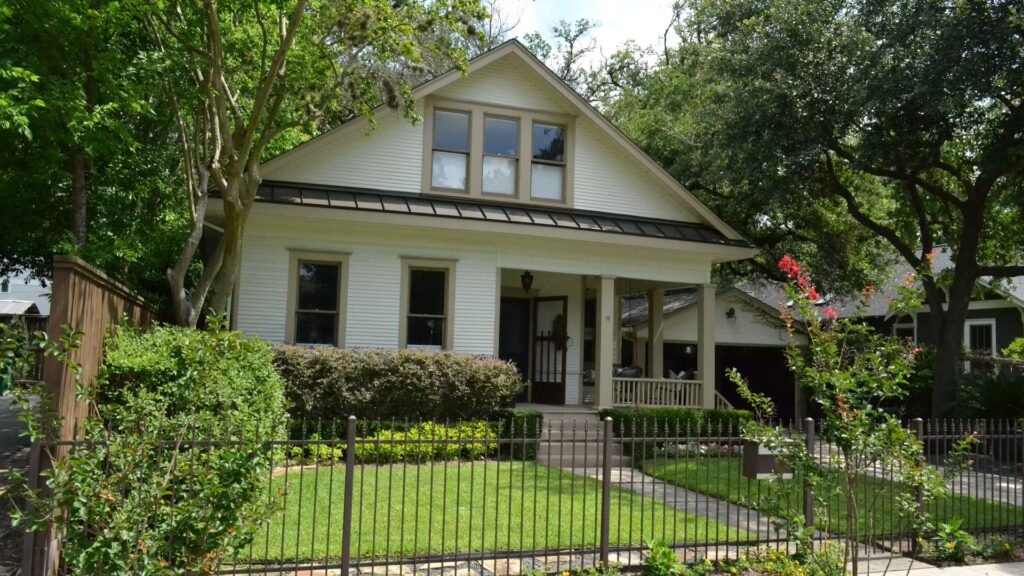
Illustration: Choosin’ Texas Living
What “closing costs” means on a Texas resale
The Consumer Financial Protection Bureau (CFPB) defines closing costs, also called settlement costs, as “the upfront costs you will be charged to get your loan and transfer ownership of the property.” Your down payment is a separate number.
At closing, a buyer brings “cash to close.” The CFPB describes it as your down payment plus closing costs, minus any deposit you’ve already paid, any amount the seller agreed to pay toward your closing costs, and other adjustments.
What buyers typically pay under the TREC contract
Paragraph 12A(2) of Form 20-19 lists “Buyer’s Expenses.” In plain terms, they fall into four groups:
- Loan costs: appraisal fees, loan application fees, origination charges, credit reports, preparation of loan documents, underwriting fee, loan-related inspection fees and other expenses tied to the loan.
- The lender’s title policy: the form calls it the “loan title policy with endorsements required by lender.”
- Prepaid items: required flood and hazard insurance premiums, reserve deposits for insurance, property taxes and special assessments, plus interest from the day the loan funds to one month before the first monthly payment.
- Other line items: one-half of the escrow fee, recording fees, copies of easements and restrictions, courier and wire transfer fees, a repair inspection and a final compliance inspection.
The list also includes Private Mortgage Insurance (PMI), the VA Loan Funding Fee or the FHA Mortgage Insurance Premium (MIP) when the lender requires one. Many items on this list only exist because there’s a loan, so a cash purchase has fewer of them. The escrow fee split still applies.
What sellers typically pay

Paragraph 12A(1) lists “Seller’s Expenses”:
- releases of existing liens, including prepayment penalties and recording fees
- release of the seller’s loan liability
- tax statements or certificates
- preparation of the deed
- one-half of the escrow fee
The same paragraph has a blank where the seller can agree to pay up to a set dollar amount toward the buyer’s expenses. That number is negotiated, and the form says it can’t be applied to brokerage compensation. If a government loan program bars the buyer from paying certain fees, paragraph 12C says the seller’s contribution goes to those fees first.
Brokerage compensation has its own paragraph, 12B, which says, “Brokerage compensation is not set by law and is fully negotiable.” Each party pays their own broker under a separate written agreement. The contract has optional boxes for the seller to pay part of what the buyer owes the buyer’s broker, or the other way around.
Title insurance: one price chart for the whole state
TDI publishes the basic premium chart, and the current one is labeled “Rates Effective March 1, 2026.” On that chart, a $25,000 policy has a basic premium of $308 and a $100,000 policy has a basic premium of $780. For policies from $100,001 to $1,000,000, TDI’s formula is to subtract $100,000 from the policy amount, multiply by 0.00494, round to the nearest dollar, then add $780.
TDI’s own worked example is a $268,500 policy. $168,500 times 0.00494 is $832. Add $780 and the basic premium is $1,612. That is one policy’s basic premium. Other title and escrow charges show up as separate lines.

Title policies come in two kinds:
- Owner’s policy. Paragraph 6A says the seller will furnish the buyer an owner policy “at ☐ Seller’s ☐ Buyer’s expense,” in the amount of the sales price. The form leaves that choice as a checkbox, so the parties settle it in the offer.
- Lender’s policy. If there’s a loan, the lender’s title policy is on the buyer’s list in 12A(2).
The $3 guaranty fee and other small lines
TDI’s title insurance page says a Guaranty Fee of $3.00 applies to each owner and lender title policy issued in Texas, starting with closings after September 30, 2026, so it applies to any closing from October 1 on. A closing with both an owner’s policy and a lender’s policy has two policies, so expect to see the fee twice. TDI directs questions about the fee to the Texas Title Insurance Guaranty Association.
Other line items:
- Escrow fee. Under 12A, the buyer and seller each pay half.
- Survey. Paragraph 6C gives three checkbox choices: the seller furnishes an existing survey with a T-47 affidavit or T-47.1 declaration, the buyer gets a new survey at the buyer’s expense, or the seller furnishes a new survey at the seller’s expense. Under the first choice, if the title company or the buyer’s lender doesn’t accept the existing survey, the new one is “at ☐ Seller’s ☐ Buyer’s expense.”
- Recording fees. They appear on both lists: the seller pays to record lien releases, and the buyer pays recording fees on the buyer’s side.
- Prorations. Paragraph 13 prorates the current year’s property taxes, interest, rents and regular HOA dues and assessments through the closing date. If the year’s actual taxes differ from the prorated amount, paragraph 13 has the parties adjust once the tax statements are available.
- Escrow reserves. The insurance and tax reserves a lender collects at closing are part of the buyer’s prepaid items listed above.
Where to see your real numbers
Your actual figures come from your lender on two federal forms.
Loan Estimate. When you apply for a mortgage, the lender gives you a Loan Estimate with the details of the loan you requested. The CFPB suggests checking that it matches what you discussed, asking why if something looks different, and requesting Loan Estimates from more than one lender so you can compare them. The CFPB names origination charges as a line to compare across lenders.
Closing Disclosure. The CFPB says lenders are required to provide it three business days before your scheduled closing. Use that window to check that your closing costs and cash to close match your most recent Loan Estimate, and that any seller credit matches what you agreed to in the contract. If a number changed, ask the lender why.
Sellers don’t get a Loan Estimate. Their costs come from the contract terms above, and sellers can ask the title company for an estimate of their side before closing day.
For a broader money checklist before you shop, see our Fall Housing Budget Planning checklist.
Questions about a Houston-area purchase or sale?
Aurhomes Group works with buyers and sellers across the Houston area. Read more for buyers and sellers, browse the areas we serve, or contact us. You can also call (281) 724-3966.
This article is general information about the standard TREC resale contract and TDI title rates as published on October 17, 2026. It is not legal, tax or loan advice, and it is not a loan offer. Contract terms are negotiable and every transaction is different, so read your own contract and consult a Texas real estate attorney with legal questions.
Sources: TDI title insurance page · TDI 2026 title rate chart · TDI title insurance FAQ · TREC Form 20-19 · CFPB Loan Estimate explainer · CFPB Closing Disclosure explainer
Images: Illustration: Choosin’ Texas Living.