
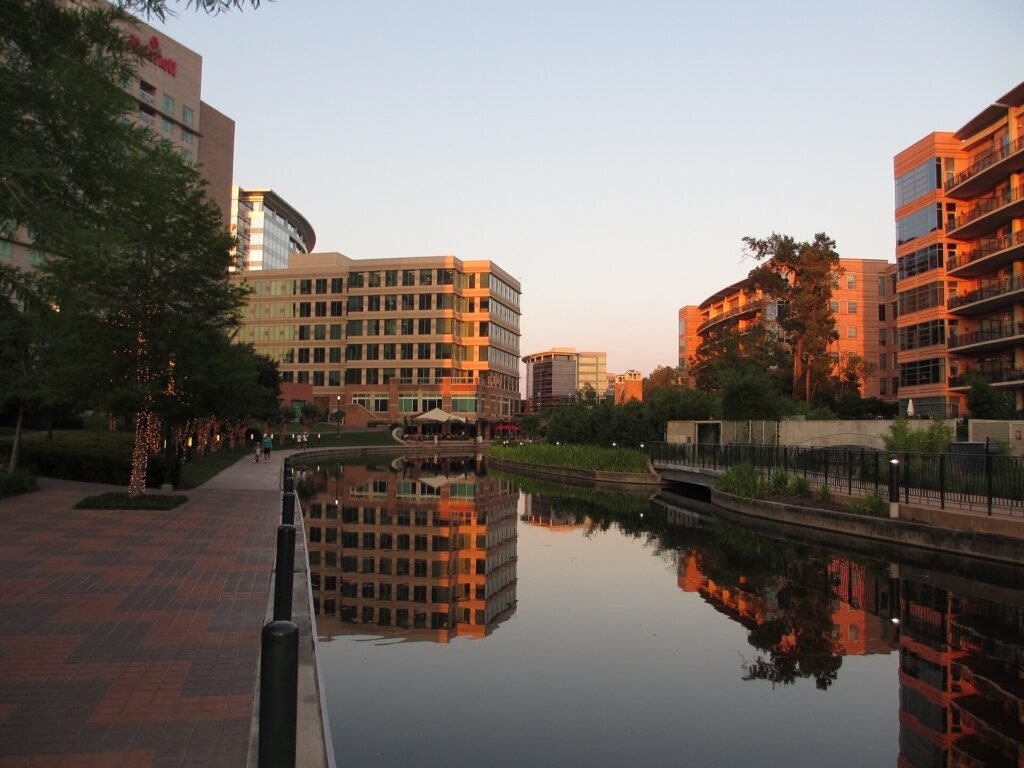
Cover: The Woodlands Waterway in warm evening light (2012). Photo: Thewayne11. CC BY-SA 3.0. Photo source · License
The Woodlands public art gives a familiar walk a new purpose. Instead of trying to see every sculpture or mosaic, choose a small cluster and spend more time with fewer pieces. That makes the outing easier to fit into an ordinary day and gives you a reason to return.
The official public-art guide includes sculptures, mosaics, and art benches around The Woodlands. It highlights usable benches near the Waterway and Lake Woodlands and provides links for further exploration. Use the guide to identify actual locations rather than assuming that every photographed piece is close to the same entrance.
Build the route around two or three works
Pick a starting point, select a few pieces in a manageable area, and check how the paths connect. Decide whether you will return the same way. A clear, short plan is especially useful when companions have different walking preferences or when the art visit sits between other commitments.
Give yourself one optional extension, not a second compulsory itinerary. If the first part takes longer because a piece sparks conversation, that is a successful art walk. You do not lose anything by leaving another work for next time.
Give your walk an art-bench theme
The official visitor bureau’s art-bench guide offers useful starting subjects: You Are Loved in lower Town Green Park near the Waterway turning basin, and Kyle Thornley’s The Texas Dawn Water Lily on the south side of the Waterway across from the Pavilion. Check the current art directory and map before setting your route; the guide is an introduction to the works, not a same-day access report.
Choose a theme that helps you compare the pieces. You could look at how artists turn seating into sculpture, how plants inspire shapes, or how a work invites interaction. Two carefully chosen stops can reveal those differences more clearly than an ambitious list spread across several parts of The Woodlands.
Put the selected works on a map alongside your arrival and return points. If the connection is longer or more complicated than your group wants, choose one work now and another on a future visit. An art walk does not need a particular mileage to count as a worthwhile outing.
Look before you read
Spend a moment with each work before looking at its title. Notice its materials, scale, and relationship to the space around it. Does it draw your attention toward a view, create a place to sit, or change the way you move through the area? Then read the available information and compare it with your first impression.
Compare an interactive work with a nature-inspired one
The visitor bureau describes You Are Loved, created by Michelle Old, Stacy Moore, and Kevin Giuseppetti, as having whispering features at its ends. It describes The Texas Dawn Water Lily as connecting the natural setting with the Waterway’s developed surroundings. Those are different invitations: one directs attention toward another person, while the other suggests looking again at the landscape.
Where current access and posted instructions permit, try the intended interaction and then step back to look at the whole form. Notice whether the experience changes your understanding of the design. Keep the path clear and wait your turn if other visitors are using the work. A functional sculpture is still a shared public object, not a private photo set.
With a companion, describe your first impression before reading the interpretation together. You may notice different shapes or uses, and that difference is part of the enjoyment. Once you know the documented title and maker, keep those names with your photographs so the images remain connected to the actual artwork.

Art benches make the distinction between object and everyday use particularly interesting. Where sitting is intended and available, pause long enough to experience that function. Other artworks may have different restrictions; follow signs instead of assuming that all public art invites climbing or touching.
Let the Waterway provide context
Visit The Woodlands’ Waterway directory helps orient visitors to the surrounding attractions and public spaces. Use it as a planning resource, but keep your route realistic. A destination that belongs to the same district may still require more walking than you want that day.
Compose a walk around places to pause
A water-side setting can influence the experience of art through reflections, background movement, and the direction from which you approach. Choose one permitted viewpoint and look for those relationships. Then compare a second angle if the public route allows. You are studying how the work sits in a place, rather than searching for a single “correct” photograph.
For a compact outing, let one work be the main stop and another the optional extension. Leave time to sit or review what you noticed before returning. If a concert, festival, or other event is part of your plan, check its separate calendar and access arrangements. Public art in an area does not make every nearby venue freely accessible.
On another day, you can choose a different cluster from the official directory, such as Hughes Landing, without forcing it into the same walk. Keeping clusters separate gives each setting room to be interesting. It also makes the route easier to explain to a friend: a clear meeting point, a couple of named works, and a realistic return.
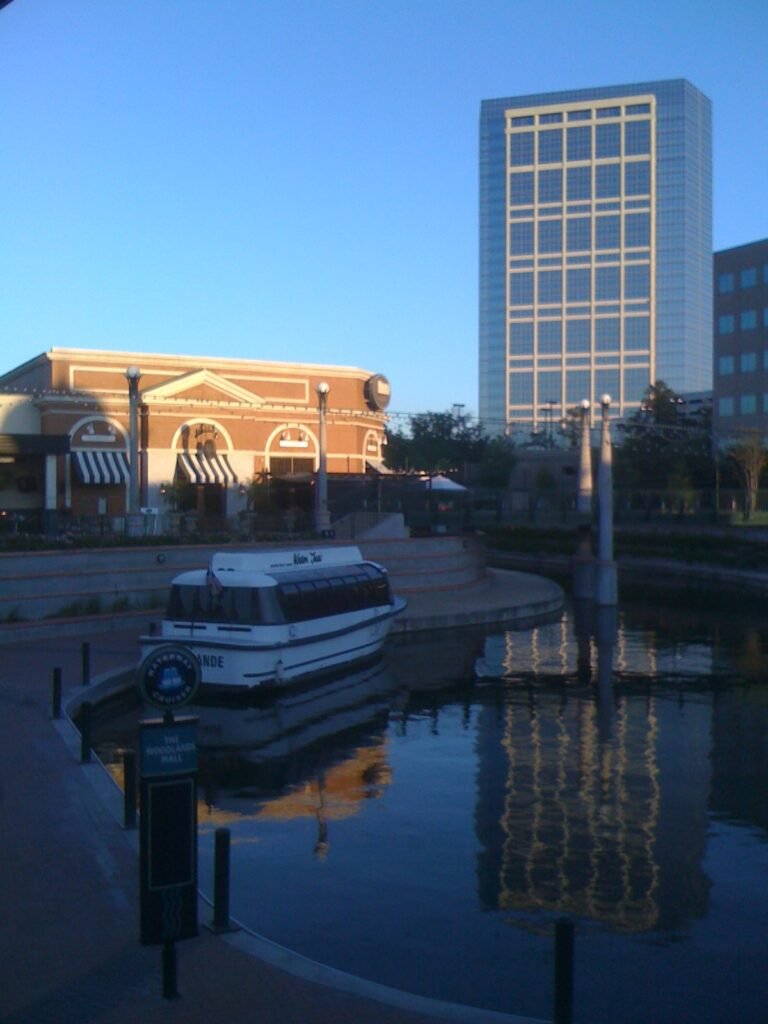
A useful exercise is to take one photograph of an artwork and another showing its setting. The second image often explains why the piece belongs in your memory of the place. Record the artist and title when provided so you can credit the work accurately if you share your photographs.
Open a three-stop art walk
At the first work, notice material. At the second, notice scale. At the third, notice how people use the surrounding space. Keep the route flexible, read labels carefully, and leave clear access for other path users.
Make local culture part of an ordinary week
If you enjoy the outing, save the route with a note about what you would repeat. A public-art walk can be a short habit rather than a special excursion. That distinction matters when you are considering what daily life in an area might look like.
Our The Woodlands area guide offers more local context. For a possible move, pair your observations with the Aurhomes Group buyer guide and test the journey from specific properties. An appealing destination is a useful starting point; the actual address and your routine determine how often you would use it.


.jpg)