Birdwatching in The Woodlands can begin with curiosity rather than a shopping list. Before buying binoculars or deciding you need to recognize every call, try a short outing with a few simple observations. The most useful first skill is learning to notice what is actually in front of you.
The Township’s wildlife page describes a Birding Backpack Program for residents. Adults eighteen and older may borrow a pack for up to a week. The listed contents include binoculars, identification guides, a local checklist, a park-and-pathway map, a folding chair, and note-taking supplies. Confirm availability with the Recreation Center at Rob Fleming Park before planning around a loan.
Try the equipment before searching for birds
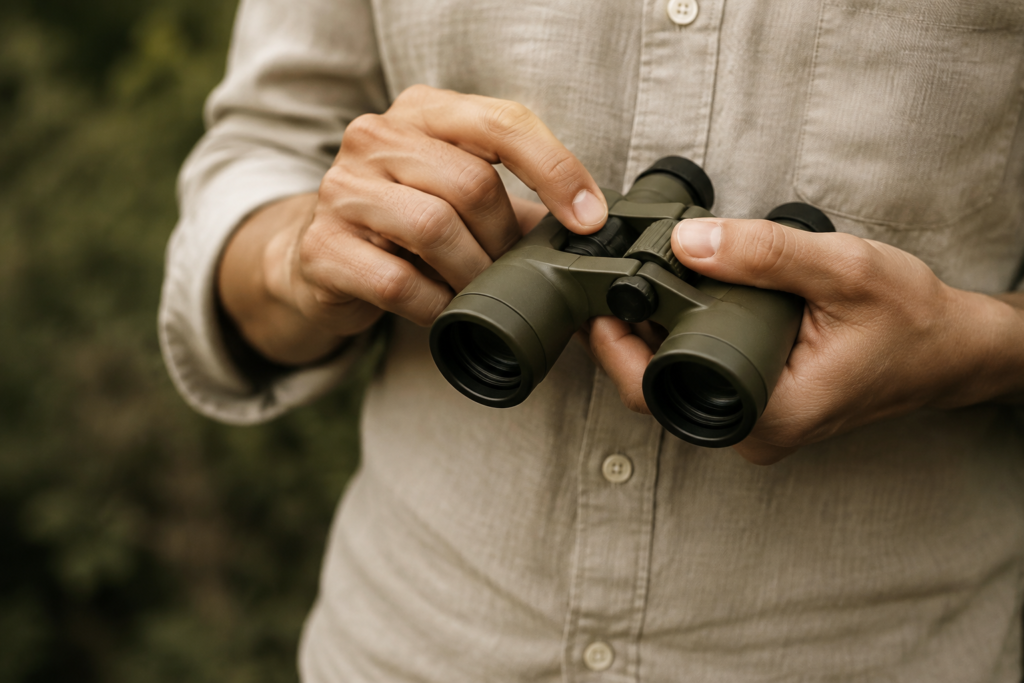
Spend a few minutes practicing with the binoculars on a stationary object. Learn how to adjust the view and bring a subject into focus without losing it. That small rehearsal can make the actual outing less frustrating, especially when a bird moves as soon as you notice it.
Make the most of the backpack contents
The Township’s Birding Backpack Program includes binoculars, identification guides with a Spanish version available, a local checklist, a parks-and-pathways map, a folding chair, and note-taking supplies. Residents age 18 and older may borrow a pack for up to a week by arranging it through The Recreation Center at Rob Fleming Park. Confirm availability and pickup and return details when reserving.
Before leaving the pickup area, make sure you understand the binocular controls and how the contents fit back into the pack. Practicing on a fixed object is easier than learning to focus while a bird moves. Adjust the view to your own eyes and ask for help if you cannot get a clear image.
Use the loan as an opportunity to discover what you actually enjoy carrying. You might prefer a seated observation session, a very short walk, or notes without photographs. Learning that preference before buying equipment is part of the value of borrowing; the goal is a comfortable experience, not an impressive collection of gear.
Keep the first session brief. You are learning how to look, not proving endurance. If you are with someone else, agree that either person can call for a pause. The moment you stop walking may be the moment you finally notice the movement that was there all along.
Use a notebook that welcomes uncertainty
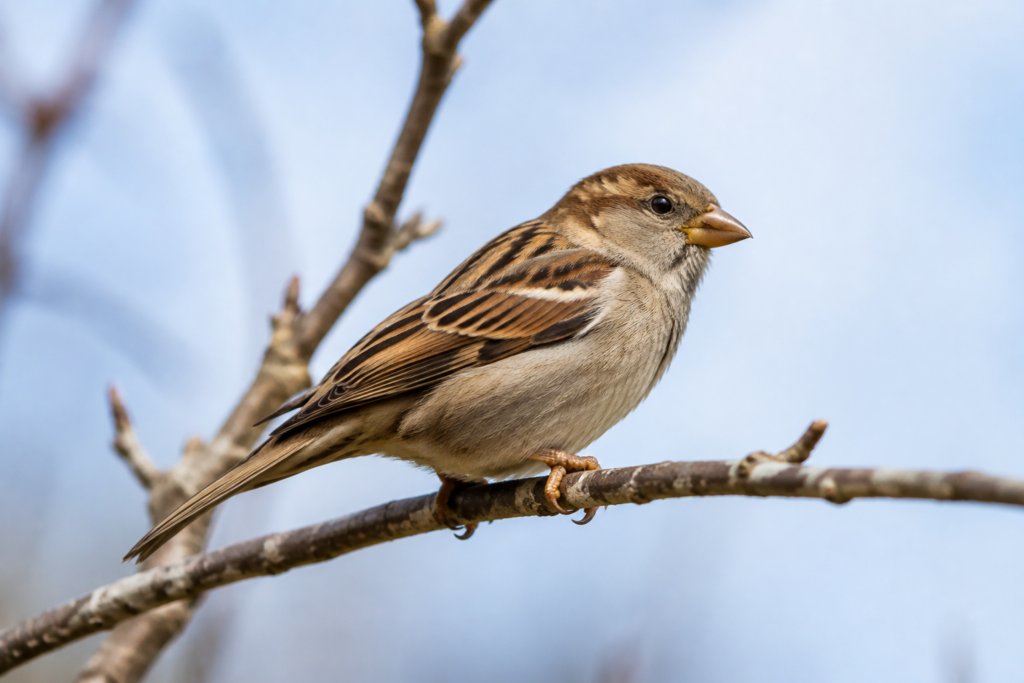
Write down where you were looking, what the bird was doing, and the features you could clearly see. Was its body upright or horizontal? Did it move along a trunk, stay near water, or cross an open space? Leave the species name blank when the evidence is not enough.
Give each sighting a useful description
Divide a page into a few compact fields: date and place, approximate size, bill or tail shape, movement, and the setting around the bird. Leave a separate space for a possible identification. That makes it easy to record a confident observation without turning a tentative name into a fact. A bird can remain unidentified and still teach you something.
If using the local checklist, treat it as a research aid rather than a promise that each listed species will appear. Start with your observation and compare it with the guide, rather than choosing an appealing name first and fitting the sighting to it. A fleeting glimpse may justify only a broad description.
With companions, compare notes before comparing guesses. One person may have seen the bill while another noticed how the bird moved. Keep conflicting details visible instead of forcing an agreement. Later you can consult the guide together and decide which possibilities remain plausible, or simply leave the record open for a future visit.
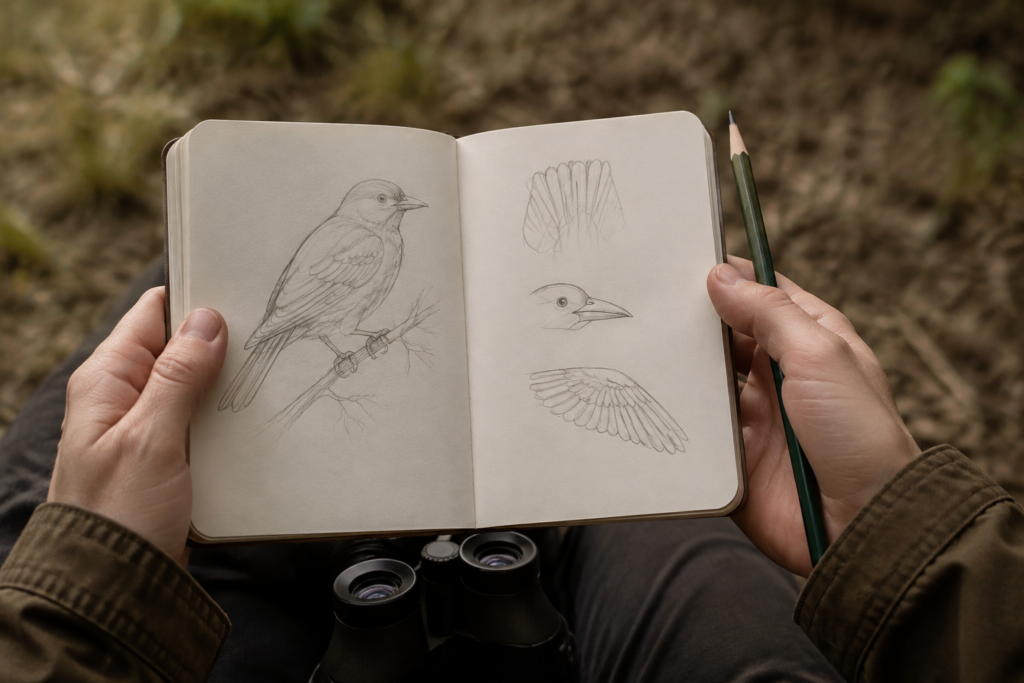
After the outing, compare notes with a guide. If two species still seem possible, keep both in your notes. Accurate uncertainty is more useful than a confident guess, and it gives you a specific feature to look for on your next visit.
Choose a manageable public route
Use current official park information to identify an appropriate starting point and any access restrictions. The Township’s wildlife page identifies local open spaces, including George Mitchell Nature Preserve, as habitat. That does not mean every informal path or every wooded edge is an authorized public entrance.
Observe from designated public areas, give wildlife space, and avoid arranging a photograph by approaching an animal. Keep noise low and let other visitors pass. If your first outing produces only a handful of observations, you still have a baseline to compare with a later trip.
Use the official preserve map for a nature-focused option
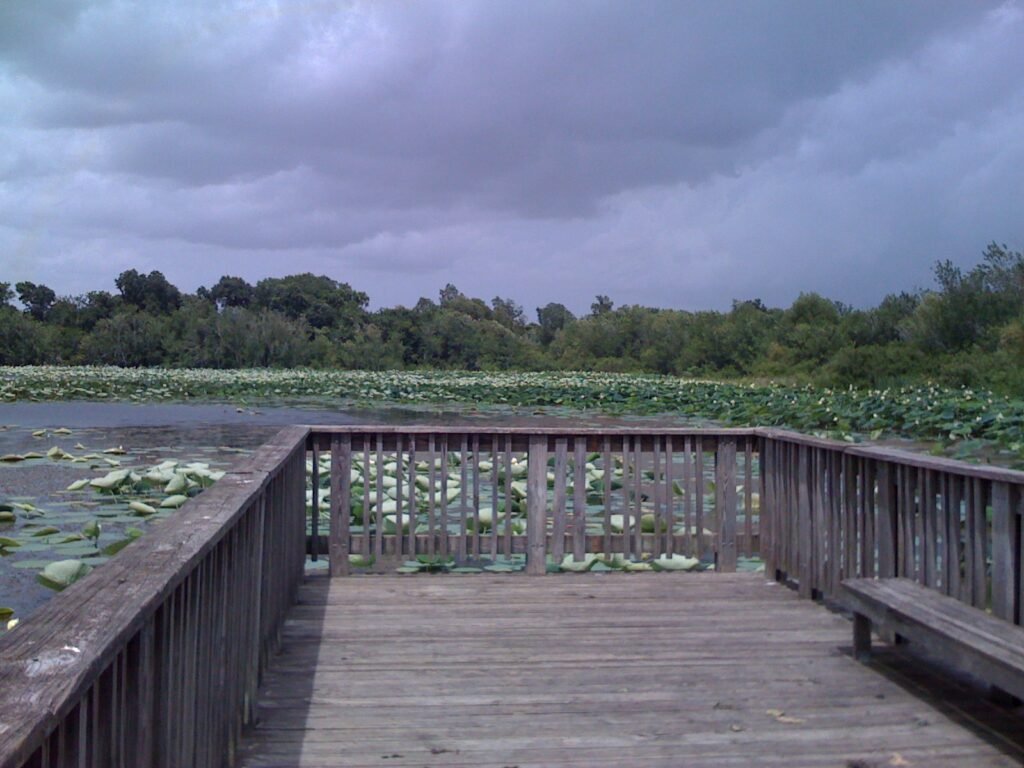
The official George Mitchell Nature Preserve page points visitors to its GIS trail map and identifies access at the Flintridge Drive trailhead and near the Rob Fleming recreation area. Review the particular entrance and route before choosing this as your birding destination. A preserve trail and a paved neighborhood pathway are different settings with different surfaces.
Choose a short permitted route with a place to pause without blocking other users. Do not add distance simply because the backpack can be borrowed for a week. A few visits to the same manageable location can give you more practice than one long outing spent carrying unfamiliar equipment. Check current conditions and respect closed areas.
If a preserve visit does not suit the day, use the included parks map to research a smaller public setting that does. The backpack is a tool, not a fixed itinerary. What matters is having time to become still, observe carefully, and return the borrowed equipment in the condition and on the schedule agreed with staff.
Open a first birdwatching session
Practice focusing before you begin. Choose one short route or observation point. Note behavior before guessing a name. Record the time and conditions. Leave uncertain sightings uncertain. Return the borrowed equipment according to the program’s instructions.
Let repetition do the interesting work
Return to the same place and see what changes. You might notice a different sound, a new pattern of movement, or a detail you missed the first time. That is one reason a modest local routine can be more rewarding than constantly chasing a new destination.
Our The Woodlands area guide offers a broader starting point for exploring local life. If nature outings are part of your home search, pair that interest with the Aurhomes Group buyer guide. Evaluate specific routes and properties, while keeping public habitat access distinct from what any individual home includes.