
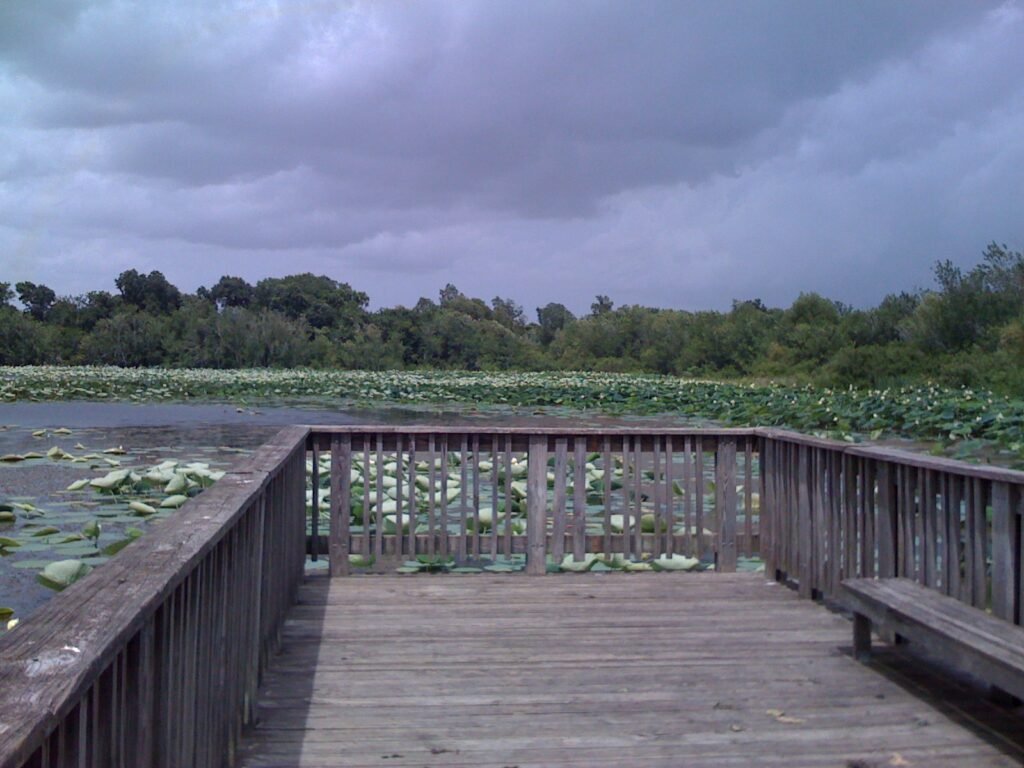
Cover: Wooden viewing platform over wetland plants at Cullinan Park (2008). Photo: lowryba. CC BY 3.0. Photo source · License
Cullinan Park birdwatching does not have to begin with expensive equipment or a long species list. Start with a short visit, a comfortable place to observe, and a willingness to be still. For a first outing in Sugar Land, noticing how birds move through the landscape is already a worthwhile result.
First-visit checklist
- Arrival: Cullinan Park is at 12414 Highway 6 in Sugar Land. The city’s facility page lists parking, restrooms, and daily hours from dawn to dusk. The Conservancy’s visitor page says there is no admission fee.
- Map and return plan: Save the Conservancy’s 2026 map before leaving. Choose a short route and a clear return point so you have time to stop and observe.
- Access: When we checked the city’s page on September 30, 2026, it listed the White Lake boardwalk and observation tower as open during regular park hours. Recheck the page before your visit and follow any closure signs on arrival.
- Trail rules: Trails are for pedestrians only; bicycles, horses, and motor vehicles are not permitted on them. Keep dogs leashed.
- Wildlife: Do not feed or approach wildlife. Alligators live in White Lake; observe from a distance and respect barriers.
Official web sources checked September 30, 2026. Conditions and access can change.
Start with observation instead of identification
Choose a place where you can stand or sit without blocking other visitors. Watch for movement before lifting binoculars or a camera. Notice whether a bird is on the water, near the edge, in open ground, or higher in vegetation. Write down those details even if you do not know its name.
Use White Lake as an observation anchor
The city’s park description identifies White Lake, a boardwalk, an observation tower, and a scenic overlook. Those features offer different ways to frame a visit. Choose an available permitted observation point where you can pause comfortably, and let wildlife come into view instead of making a distant bird the destination.
Another place to pause
The Conservancy’s birding guide describes a Bird Viewing Area on the loop trail just past the restrooms, with benches, native plants, and two water drips. Use the map and signs to find it, approach quietly, and leave room for other visitors. These features offer a place to observe; they do not guarantee sightings.
Begin with the whole scene before narrowing your attention. Look at open water, the vegetation at its edge, and the space above it. Then follow one movement long enough to describe it: floating, wading, perching, or flying through. A behavior note often gives you more useful information than a color seen briefly in changing light.
If you bring binoculars, locate the subject with your eyes first and raise the binoculars without looking away. Take breaks to regain the wider view and avoid blocking the route while concentrating. With a companion, describe the subject’s position using an obvious fixed landmark. That is much easier to follow than pointing generally and saying it is “over there.”
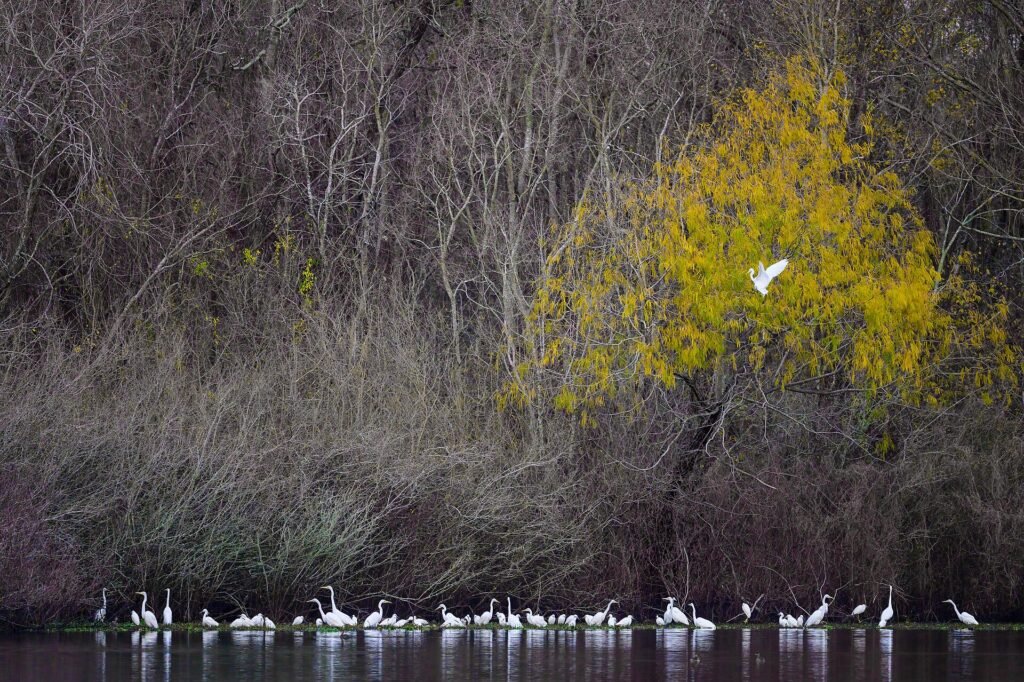
A useful beginner note includes size, shape, color pattern, behavior, and location. That is more reliable than deciding from one quick glimpse that you saw a particular species. Later, compare your notes with a guide or ask a knowledgeable program leader to help you narrow the possibilities.
Keep the route shorter than your curiosity
Birdwatching changes the pace of a walk. A distance that feels small on a map can fill plenty of time when you stop often. Choose a manageable route from the official map and leave the longer exploration for another visit. You can learn a great deal without covering every trail.
Check the weather and any closures before setting out. Bring water and footwear appropriate to the conditions, and respect any closed boardwalk or trail segment. If the route is not suitable that day, changing the plan is better than stepping around a barrier or creating a new path through vegetation.
Use the listed distance without making it a deadline
The city lists a .33-mile trail around White Lake within the larger 754-acre park. Treat that short named feature as a starting point for map research, not a guarantee that every segment will suit the day’s conditions or your group’s access needs. For route planning, use the Conservancy’s 2026 map page; the city’s facility page currently links an older 2020 map. Check the city page separately for boardwalk and tower notices.
A short mapped distance leaves room for long pauses. Decide whether your goal is to compare two viewpoints, practice using binoculars, or simply sit with a water view. Those are complete outings in themselves. Covering more ground can actually work against your purpose if you spend the whole time searching for the next stopping place.
Plan the return while you still have energy and attention to spare. Photograph a permitted map or save it before starting, and note the entrance you used. If you change direction, make that a deliberate choice shared with your companions. This keeps a quiet nature visit from becoming an improvised attempt to find an unfamiliar exit as daylight changes.
Let the setting guide your attention
Try comparing two observation points rather than chasing a distant sighting. At the first, listen quietly. At the second, watch a different part of the landscape. Ask what changes between them: the sounds, the amount of cover, or the way you can see the water.
Notice the habitat around the sighting
Cullinan Park is part of the Texas Parks and Wildlife birding-trail network’s Katy Prairie Loop, according to the city. That regional connection is a useful reason to look beyond a single sighting. The park’s educational signs can help you connect what you notice at one observation point with the wider landscape, without assuming a particular species will appear during your visit.
Make a simple habitat sketch: water in the middle, vegetation at the edge, and the position of the bird or movement you observed. It does not need to be artistic. Add a few words about the behavior and the conditions you actually experienced. Later, the sketch can explain a distant photograph that would otherwise be difficult to interpret.
On a return visit, use the same observation point and compare your notes. Some changes may be obvious and others subtle; neither a busy outing nor a quiet one proves what you should expect every time. Keeping the date and your uncertainty in the record makes the exercise more interesting. You are building familiarity with a place, not a guaranteed wildlife itinerary.

Keep your distance from wildlife and avoid trying to draw an animal closer for a photograph. You are documenting an encounter, not arranging one. A simple landscape image and a few written notes can preserve the experience even when no bird remains still long enough for a clear picture.
Your Cullinan Park field sheet
Copy these prompts into your notes or print this article to use them as a worksheet. Start with one observation and repeat the observation section as needed. Leave uncertain details blank or add a question mark rather than filling in a guess.
Visit details
- Date: ____________________
- Start time: ____________________
- Finish time: ____________________
- Number of observers: ____________________
- Observation point or route: ____________________
- Weather and visibility: ____________________
- Distance estimate, if walking: ____________________
One observation
- Time and location: ____________________
- Seen, heard, or both: ____________________
- Number of birds (mark estimates): ____________________
- Setting—open water, shoreline, trees, sky, or other: ____________________
- Size, shape, and markings: ____________________
- Behavior or sound: ____________________
- Possible identification and why: ____________________
- Uncertain details: ____________________
- Photo, recording, or sketch reference: ____________________
After your visit
Keep your original notes when checking an identification. A description of what you actually observed remains useful even without a species name. The eBird guidance on documenting observations can help you record the evidence behind an identification.
If you would like to contribute your observations, the Conservancy links to the Cullinan Park eBird hotspot. Read the eBird checklist protocol guide first. When reporting walking distance, count each section once and exclude repeated travel over the same section.
Mark a checklist complete only when birding was your main purpose and you report every species you identified by sight or sound to the best of your ability. See eBird’s guidance on primary purpose and complete checklists before choosing that option.
Field sheet prepared by Choosin’ Texas Living. Official resource links checked September 30, 2026.
See how a nature visit fits your week
If you are getting to know Sugar Land’s parks and neighborhoods, notice the whole trip, including the journey to the entrance. Would you return for a brief morning visit, or save it for a longer day? Your answer helps separate an occasional destination from an everyday routine.
For a possible move, keep those observations with your property notes and the Aurhomes Group buyer guide. We can help you compare specific homes with the outings you value while keeping the individual property’s questions separate from the appeal of a public park.



.jpg)